Desde 2017, o Programa REDD Early Movers (REM MT) atua em Mato Grosso fortalecendo quem protege as nossas florestas. Criado após o Estado alcançar uma redução histórica de 90% no desmatamento ilegal ao longo de uma década, o programa apoia agricultores familiares, comunidades tradicionais, produtores rurais sustentáveis e povos indígenas. Além disso, o REM MT fomenta iniciativas de agricultura de baixo carbono, promovendo o desenvolvimento sustentável e combatendo diretamente as emissões globais de CO₂.
Na fase I do Programa REM MT, foram apoiados 155 projetos, beneficiando 131 organizações sociais, entre elas, 104 associações ou cooperativas. Os projetos abrangem os três biomas de Mato Grosso: Amazônia, Cerrado e Pantanal.
Dentre os resultados alcançados pelo programa, se destacam as mais de 500 aldeias atendidas, onde vivem 43 povos indígenas, os 108 municípios mato-grossenses beneficiados, as mais de 44 mil pessoas atendidas e os 160 mil hectares de desmatamento evitados em Mato Grosso por meio da atuação do REM MT, nos anos de 2021 e 2022.
38 million reais were invested in modernizing actions to combat illegal deforestation and integrating inspection institutions. As a result, there was a 185% increase in the number of flagrant incidents and a 400% increase in the total number of environmental fines. Furthermore, the trial time for imposing fines fell from four to two years, between June 2019 and June 2023.
The REM MT Program begins Phase 2 in the second half of 2024, with the German and UK governments guaranteeing continued investment in the state's environmental preservation. For this new phase, the UK government has invested over £15 million (R$91 million) and the German government an additional €15 million (R$80 million).
Para ver todos os resultados da Fase 1 do Programa REM MT, acesse o Relatório Executivo (clique aqui).
deforestation
Prêmio pela Redução do Desmatamento
O Programa REM MT é um exemplo prático do mecanismo de REDD+ (Redução de Emissões provenientes de Desmatamento e Degradação florestal), um conceito consolidado em fóruns internacionais como a COP 13 e o Acordo de Paris para recompensar financeiramente os esforços de países e estados para evitar o desmatamento e reduzir emissões de gases de efeito estufa.
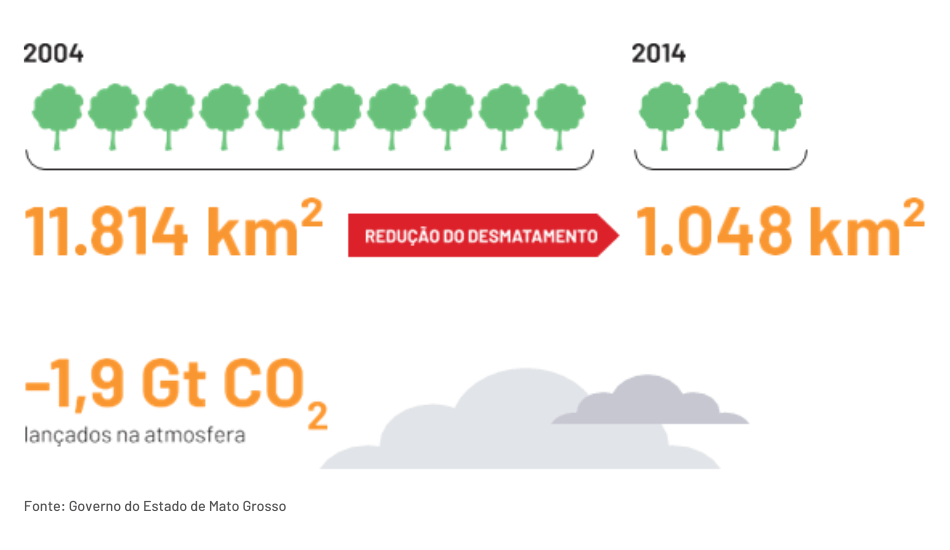
O gráfico abaixo ilustra exatamente essa redução histórica de Mato Grosso. Ele mostra que, em apenas dez anos, o estado reduziu sua área desmatada de expressivos 11.814 km² (em 2004) para 1.048 km² (em 2014). Essa drástica queda evitou o lançamento de 1,9 bilhão de toneladas de CO₂ na atmosfera.
São esses dados concretos, validados por órgãos internacionais, que credenciaram Mato Grosso a receber o Pagamento por Resultados do REM MT. Assim, o programa transforma a conservação ambiental em incentivo financeiro para impulsionar o desenvolvimento sustentável em todo o estado.
Contexto da Área de Atuação
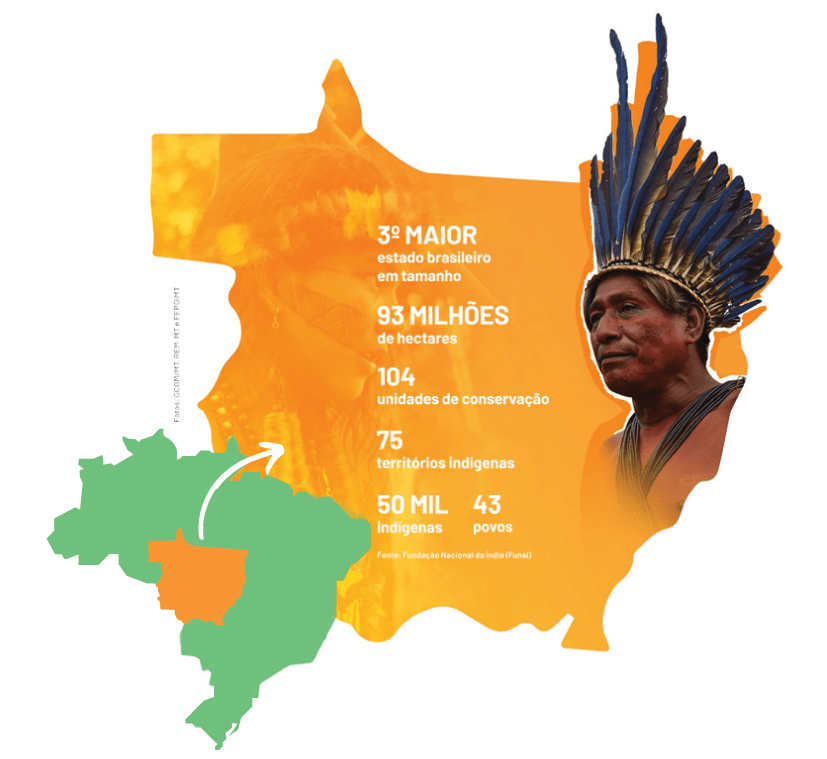
Com 93 milhões de hectares e vasta diversidade socioambiental, o território de atuação do Programa REM MT abriga 43 povos indígenas e dezenas de áreas protegidas atendidas por iniciativas de conservação:
Produce, Conserve and Include
Estratégia Produzir, Conservar e Incluir (PCI)
Lançada na COP21 em Paris (2015), a Estratégia Produzir, Conservar e Incluir (PCI) foi o grande diferencial que colocou Mato Grosso no centro do financiamento climático global. A PCI demonstrou ao mundo que o estado não tinha apenas histórico de combate ao desmatamento, mas também um plano estruturado para conciliar produção agropecuária eficiente com rigorosa preservação ambiental.
A PCI é uma estratégia intersetorial que visa a expansão e aumento da eficiência da produção agropecuária e florestal, a conservação dos remanescentes de vegetação nativa, a recomposição dos passivos e a inclusão socioeconômica da agricultura familiar, dos povos indígenas e populações tradicionais. Atualmente, a estratégia é implementada através de programas atuantes e a criação do Instituto PCI.
Transforming the logic
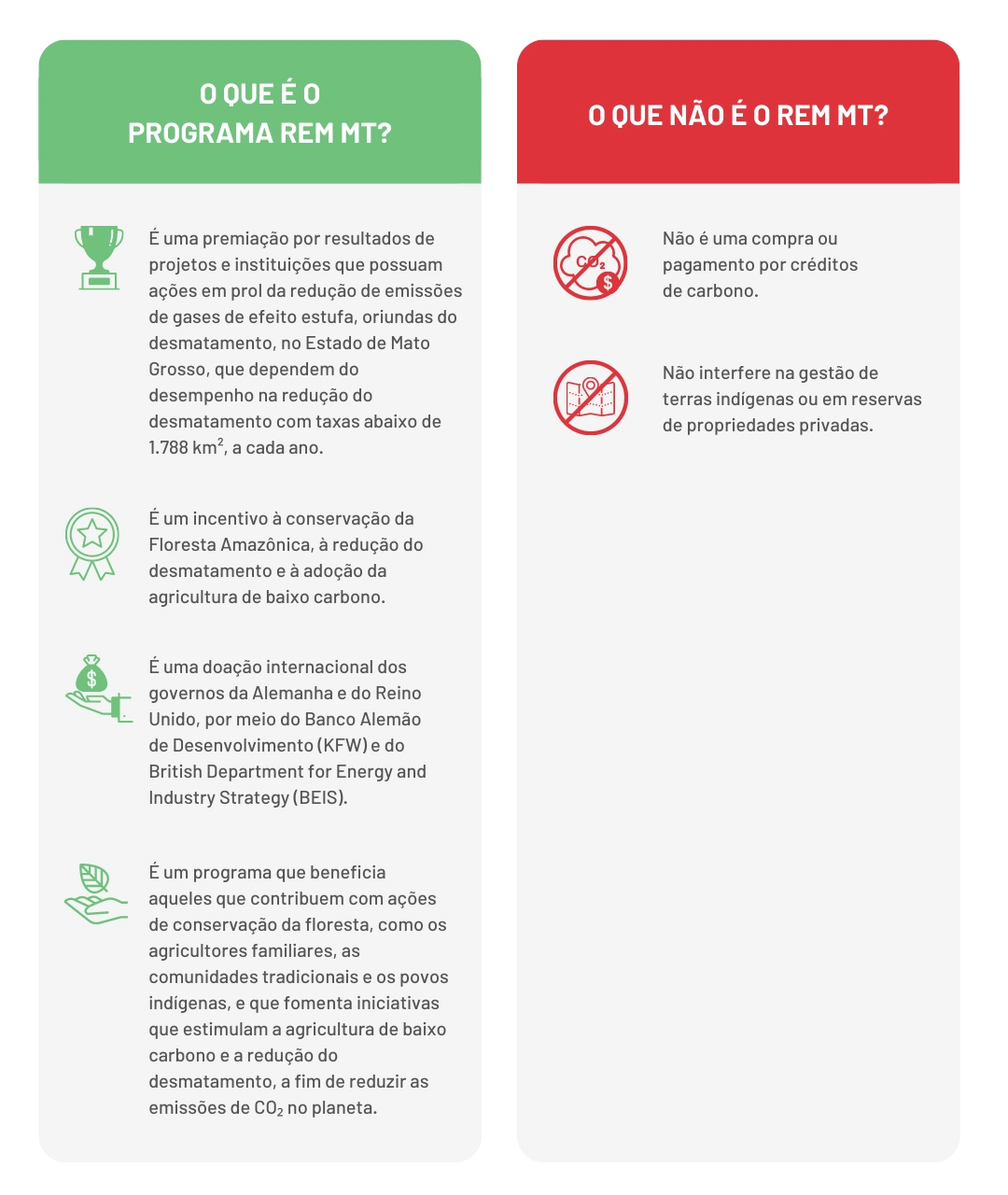
Entenda o REM MT: O que é e o que não é
Este painel apresenta com clareza o escopo do Programa REM MT, diferenciando seus incentivos à preservação ambiental das garantias de soberania sobre as propriedades e territórios. Outras dúvidas podem ser consultadas na página de Perguntas Frequentes ou diretamente pelo WhatsApp.
REM MT
Timeline
Subprograms
Subprograms of REM MT
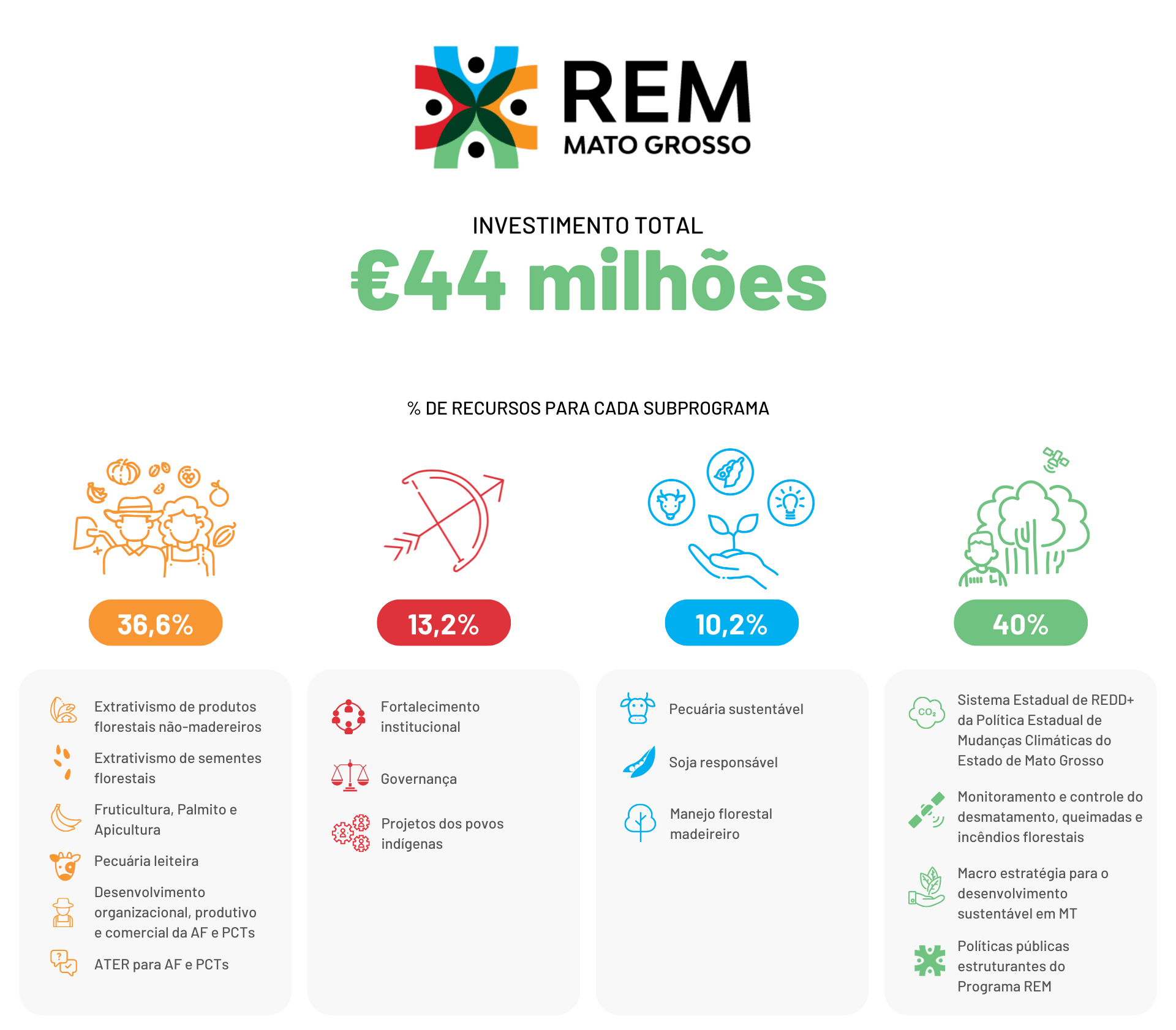
O REM MT é dividido em quatro subprogramas. São eles:
Institutional Strengthening and Structuring Public Policies Subprogram (FIPPE)
It helps to strengthen and integrate institutions that work to prevent and combat deforestation and forest fires in the State and to consolidate the REDD+ system. This structuring takes place, among other actions, through the removal of machinery used illegally in deforestation, monitoring of deforestation via satellite and the provision of daily allowances and equipment to field teams that monitor environmental offenses.
Beneficiaries: Public institutions of the State Government and the Produce, Conserve and Include (PCI) Strategy Areas of expertise: Estado de Mato Grosso Investments: R$ 93.883.068,55 milhões (Fase 1)
Indigenous Territories IT
It contributes to the strengthening of indigenous organizations in Mato Grosso, including the Federation of Indigenous Peoples of Mato Grosso (FEPOIMT), as an entity representing the 43 indigenous peoples of the state, which are home to more than 40 thousand people in their territories.
Furthermore, it works to support projects that aim to strengthen the territorial and environmental management of indigenous lands, food security, income and health generation and the protagonism of indigenous women.
Beneficiaries: Aproximadamente 30 mil indígenas de 43 povos Areas of expertise: State of Mato Grosso Investments: R$31,149,988.98 million
Family Agriculture and Traditional Peoples and Communities Subprogram (AFPCTs)
Support for family farmers, traditional peoples and communities by strengthening value chains that value standing forests and encouraging agroecological and low-carbon practices, seeking socio-productive transformation and increased income generation with a focus on sustainability.
Dentre as cadeias beneficiadas, estão as do Cumbaru, Babaçu, Pequi, Castanha do Brasil, extrativismo de sementes florestais, fruticultura, palmito e apicultura, além da pecuária leiteira. Juntos, esses projetos beneficiam mais de 8 mil famílias que estão distribuídas em diferentes regiões do Estado.
Investments: R$ 85,524,823.76 million
Sustainable Production Subprogram (PS)
It works on projects related to sustainable livestock farming, responsible soy, sustainable timber forest management and actions related to the dissemination of good practices and technological innovation, seeking to strengthen the transformation of rural producers' production logic and making Mato Grosso's commodity chains connected with a sustainable market.
Beneficiaries: Small and medium-sized rural producers (Up to 15 fiscal modules) Areas of expertise: Mato Grosso Investments: R$ 23,834,786.95 million
Benefit Sharing
Benefit Sharing
The REM MT Program was presented to the State's REDD+ governance bodies: Mato Grosso Climate Change Forum, REDD+ Management Council and REM MT State Management Committee, which defined the following distribution of benefits:
40%
of the resources are destined to institutional strengthening, supporting bodies responsible for implementing environmental and REDD+, social and economic development policies, in addition to the control and inspection of public policies. They also support the strengthening of the PCI Strategy.
60%
dos recursos são destinados aos beneficiários diretos do Programa, visando apoiar produtores de pequeno e médio porte, comunidades extrativistas, povos indígenas e comunidades tradicionais. Além disso, visa o desenvolvimento de tecnologias inovadora, bem como o apoio ao desenvolvimento de mercados sustentáveis para as commodities do estado.
Critérios para acessar os recursos:
Impacto ambiental positivo, sendo que as atividades não podem gerar novos desmatamentos;
Impactos socioeconômicos positivos (melhoria das condições de vida dos grupos alvo, assegurando a segurança alimentar);
relevância quanto à relação aos benefícios socioeconômicos e/ou redução do desmatamento no Estado, adicionais aos programas já existentes;
Valor agregado que recursos podem trazer para o impacto e alcance das ações existentes;
Impactos positivos em relação à equidade de gênero;
Princípios da boa governança e da transparência no uso dos recursos;
Prioridade geográfica (territórios críticos e prioritários), conforme áreas apresentadas na Estratégia de Repartição de Benefícios.
Change
Theory of Change
A Teoria da Mudança do Programa REM MT baseia-se na premissa de que a preservação ambiental e o desenvolvimento econômico se fortalecem mutuamente. Para isso, o programa atua no fortalecimento da capacidade do Estado para o controle ambiental, na restauração florestal e na modernização da Assistência Técnica e Extensão Rural (ATER) voltada à produção de baixo carbono.
Paralelamente, incentiva a inclusão socioprodutiva da agricultura familiar, o protagonismo das comunidades tradicionais e povos indígenas e a valorização da sociobiodiversidade. Esse suporte prepara os produtores locais para atender às exigências de mercados globais que priorizam a sustentabilidade e o respeito às normas ambientais.
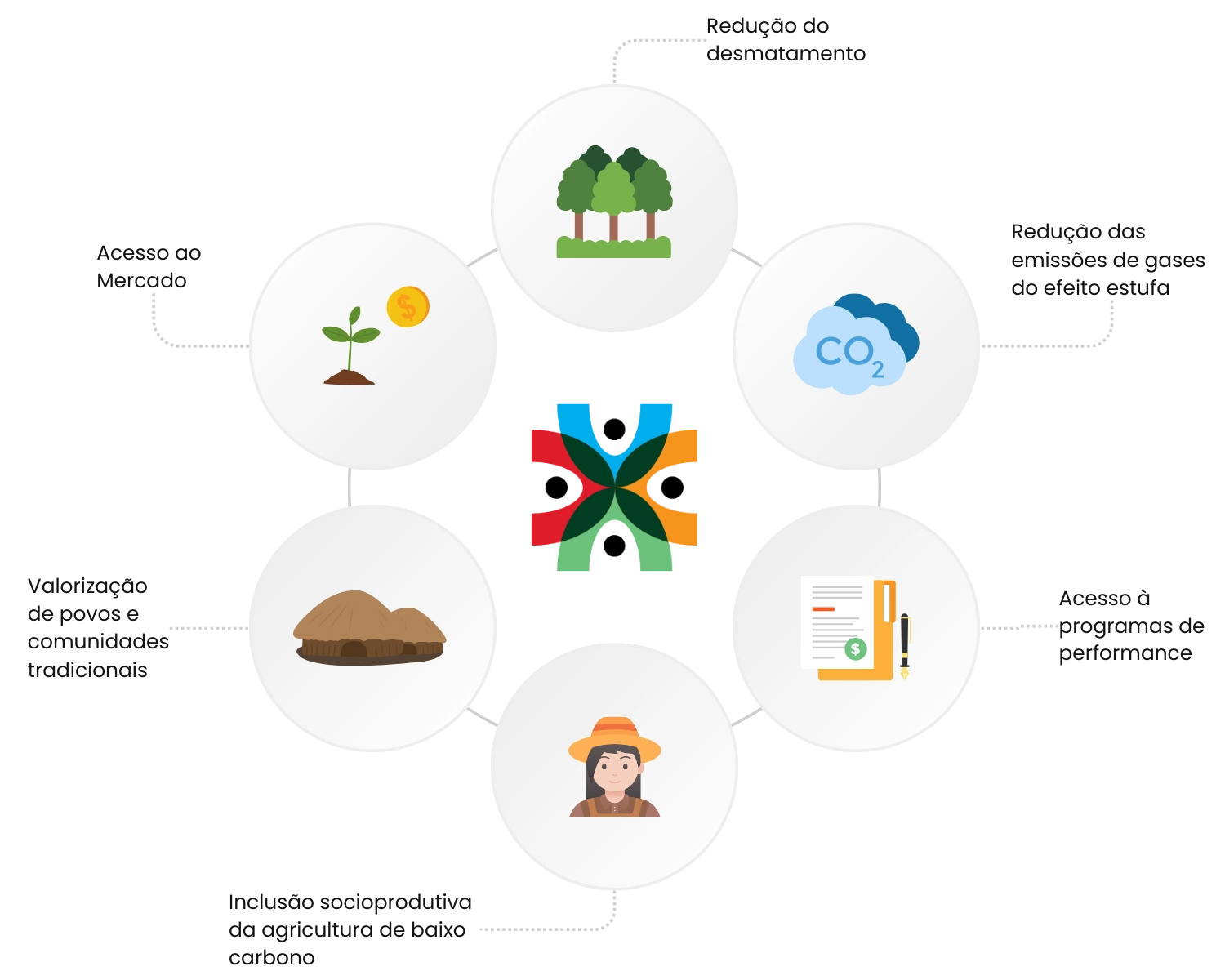
O esquema abaixo ilustra como as ações do REM MT se conectam em uma engrenagem contínua de causa e efeito:
Investimento Local: Apoio à inclusão socioprodutiva, valorização de povos e comunidades tradicionais e garantia de acesso ao mercado.
Impacto Ambiental: Adoção de boas práticas que levam à redução do desmatamento e à diminuição das emissões de gases de efeito estufa (CO2).
Reinvestimento em Performance: Os resultados alcançados habilitam o Estado a acessar novos programas de performance (REDD+), atraindo novos recursos para reinvestir na base e perpetuar o ciclo de baixo carbono em Mato Grosso.